D2B is one of the newer commerce model acronyms — less well-known than B2B or D2C, but increasingly relevant as brands look to sell directly to business buyers without going through distributors or wholesalers.
D2B meaning: what does D2B stand for?
D2B stands for Direct-to-Business. D2B full form: Direct to Business. It describes a model where a brand, manufacturer, or supplier sells its products or services directly to business customers — bypassing wholesale distributors, agents, or intermediaries.
It is the business-buyer equivalent of D2C (Direct-to-Consumer): instead of selling direct to individuals, you sell direct to companies.
D2B vs B2B: what's the difference?
D2B and B2B both involve businesses buying from other businesses. The distinction is about the channel and the relationship:
| B2B | D2B | |
|---|---|---|
| What it describes | Any business selling to another business | A brand/manufacturer selling directly to business buyers |
| Intermediaries | Often includes distributors, agents, resellers | None — direct relationship |
| Who owns customer data | Often the distributor or reseller | The brand itself |
| Pricing | May be set by the channel partner | Controlled directly by the brand |
| Example | A brand selling to a wholesaler who sells to retailers | A brand selling directly to retailers via its own platform |
D2B is a specific type of B2B — one where the brand cuts out the middlemen in the B2B supply chain and owns the relationship with the end business buyer.
D2B vs D2C
| D2C (Direct to Consumer) | D2B (Direct to Business) | |
|---|---|---|
| Who buys | Individual consumers | Businesses and organisations |
| Order size | Small, individual | Larger, bulk or recurring |
| Relationship | Transactional / subscription | Contract, ongoing procurement |
| Platform needs | Consumer storefront, simple checkout | B2B catalogue, volume pricing, invoicing |
The full commerce model breakdown
| Model | Full form | Buyer type | Intermediaries |
|---|---|---|---|
| B2C | Business to Consumer | Individual consumers | Retailers/distributors possible |
| D2C | Direct to Consumer | Individual consumers | None |
| B2B | Business to Business | Businesses | Often present |
| D2B | Direct to Business | Businesses | None |
| C2C | Consumer to Consumer | Individuals | Platform only |
See also: D2C meaning · B2B meaning
Why brands are moving to D2B
The same forces driving D2C adoption are pushing manufacturers and brands toward D2B:
- Margin recovery — distributor and agent margins can be 20–40% of the sale price. D2B captures that directly.
- Customer intelligence — selling through a reseller means the reseller owns the buyer relationship. D2B means you know who your business customers are, what they buy, and when they reorder.
- Speed — distributor networks slow down product launches, pricing changes, and promotional campaigns. A D2B platform lets you update pricing and run promotions instantly.
- Customisation — business buyers increasingly want configurable products and personalised catalogues. This is easier to deliver direct.
Building a D2B platform with Tradly
A D2B platform needs the same core infrastructure as a B2B marketplace, with the emphasis on the brand controlling the experience:
- Branded storefront — your domain, your design, not a distributor’s catalogue
- B2B pricing — volume tiers, customer-specific pricing, minimum order quantities. Docs: Pricing
- Business account verification — require business registration before buyers can access wholesale prices
- Catalogue management — large SKU counts with variants, bundles, and attributes. Docs: Attributes
- Reorder and subscriptions — recurring business buyers need fast reorder, not a consumer checkout flow
- Commission-free — unlike selling through a distributor, you keep the full margin. Docs: Commission
Free B2B & D2B Templates
B2B & D2B Commerce Templates
See AllSimple and FREE. Launch your project today!
- Launch Marketplaces, Online Storefronts, Booking Apps, Classifieds, Directories, Partner Portals, App Stores, etc.
- Tradly pricing starts with ZERO. You pay only when you grow.
- Free No-code Integrations, No-Code Editor
Checklist from start to end on what you need to build a marketplace using Tradly Platform.
Tradly Platform solution is catered to different groups separately
- For developers: Headless API solution. Using the API solution, developers can build apps on top of it.
- For no-code creators: A simple toggle based SuperAdmin Panel to configure features in the already pre-built apps (also called as storefront, front end apps, templated apps).
For developers
- Signup for a free account
- Get the API keys in the SuperAdmin > Settings > API section = Refer the API reference to start building the app
- Optionally Fork Open source app starter Kits
5 Steps for no-code creators and builders
Choose the templates Website or Mobile Apps
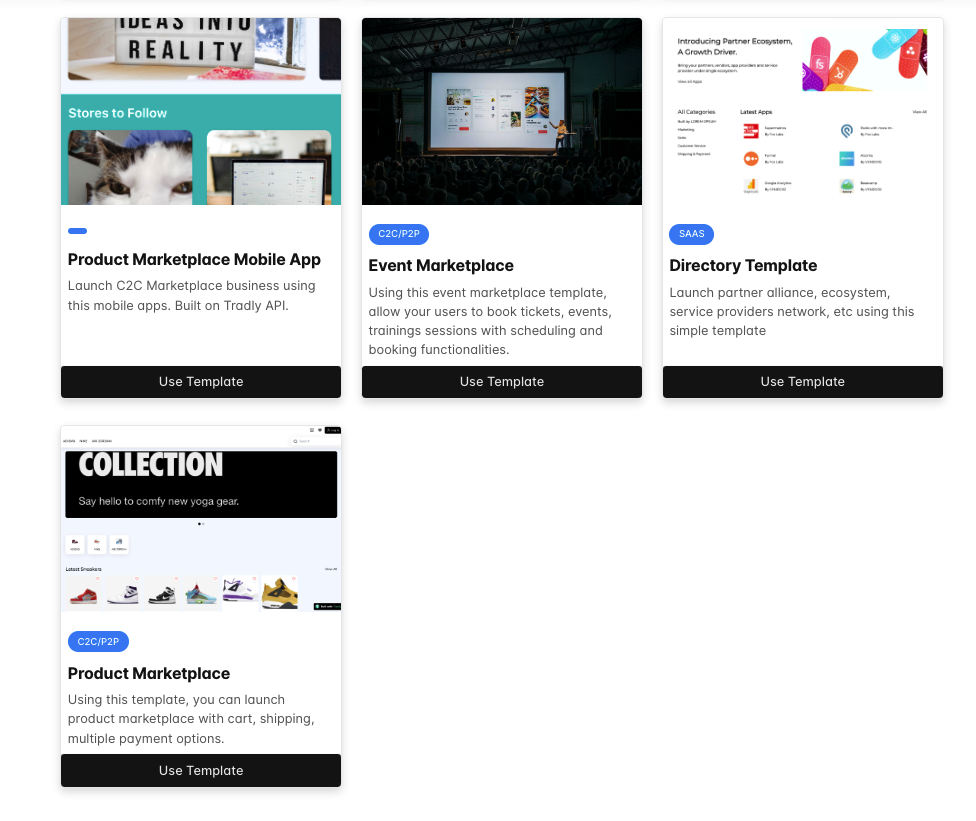
Do the branding customisation & business informations on launchpad
Prototype your app using our SuperAdmin builder and Visualise your app through test apps.
Launch
- Web App: By default when you register, you will get the production URL to use the app. And you can add custom domain.
- Mobile App: When you are ready to launch, Subscribe to our plans and get a white label app build
Advanced Informations
A. UI Customisation via SuperAdmin
Settings > App Customistion
- App Name
- App Primary & Secondary Colour
- App Icon
- Splash launch images
- Onboarding images, Onboarding Text
- Registration Text
- Sell Icon (optional)
- App title in Home Screen (Default will be app name) And others
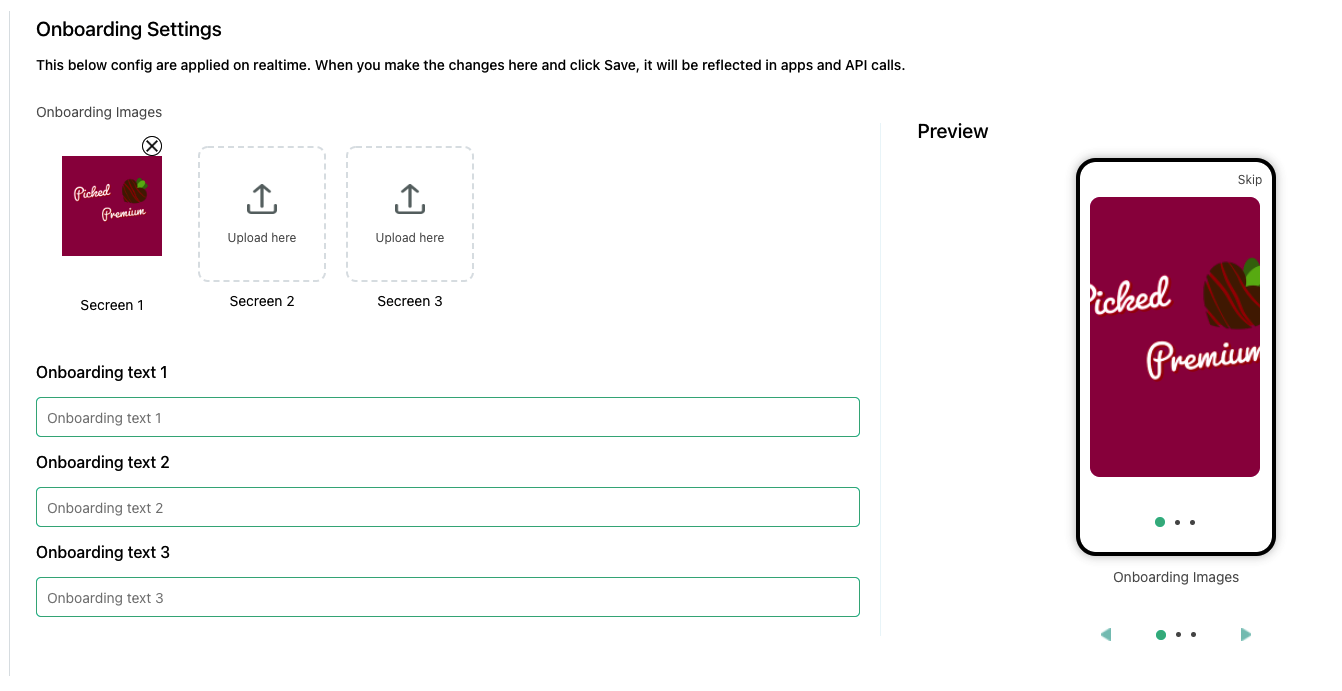
B. Platform Fundamentals
You must configure the below things for the system to be able to open accounts, submit listings and make purchases.
Configure accounts: Settings > accounts(categories, attributes)
Configure listings: Settings > listings (Setting up listings information to be collected. Categories, attributes)
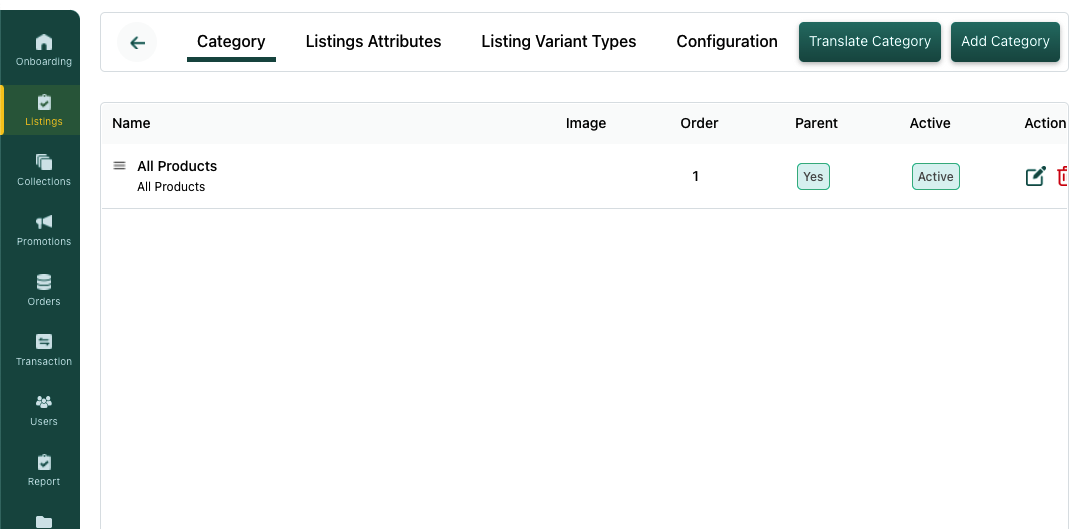
Stripe/other payment gateways configuration
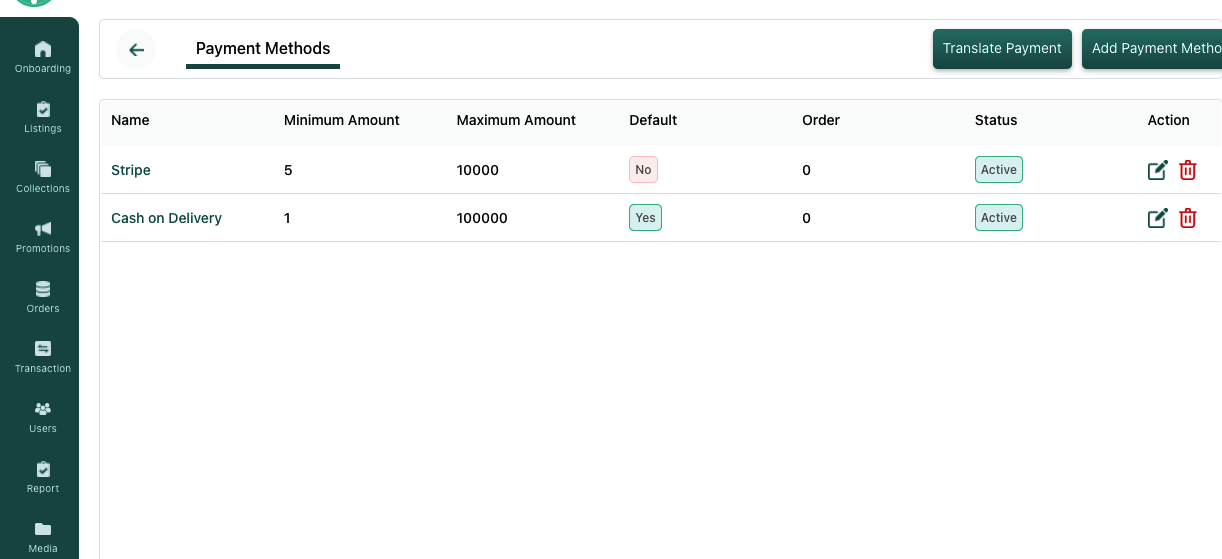
Configure revenue model, commissions: Settings > commissions OR Settings > Subscriptions OR Settings > Special Fees
C. Integrations
App integrations
- Chat setup via Firebase ,
- Optionally referral / sharing features via Branch
- Optionally later legal informations (privacy, terms, etc)
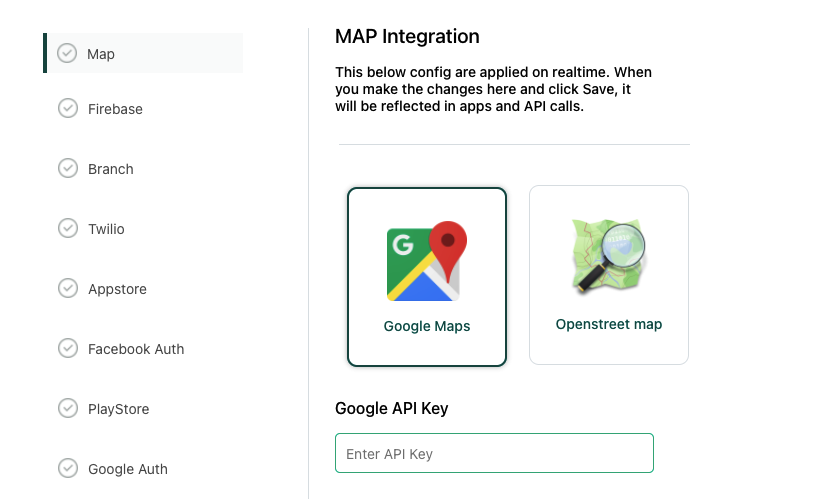
System integrations
- Configure email if you want the emails to be whitelisted
- Configure domain if you want good deliverability of emails
- Configure Google Maps if you have location specific features
Website Integrations
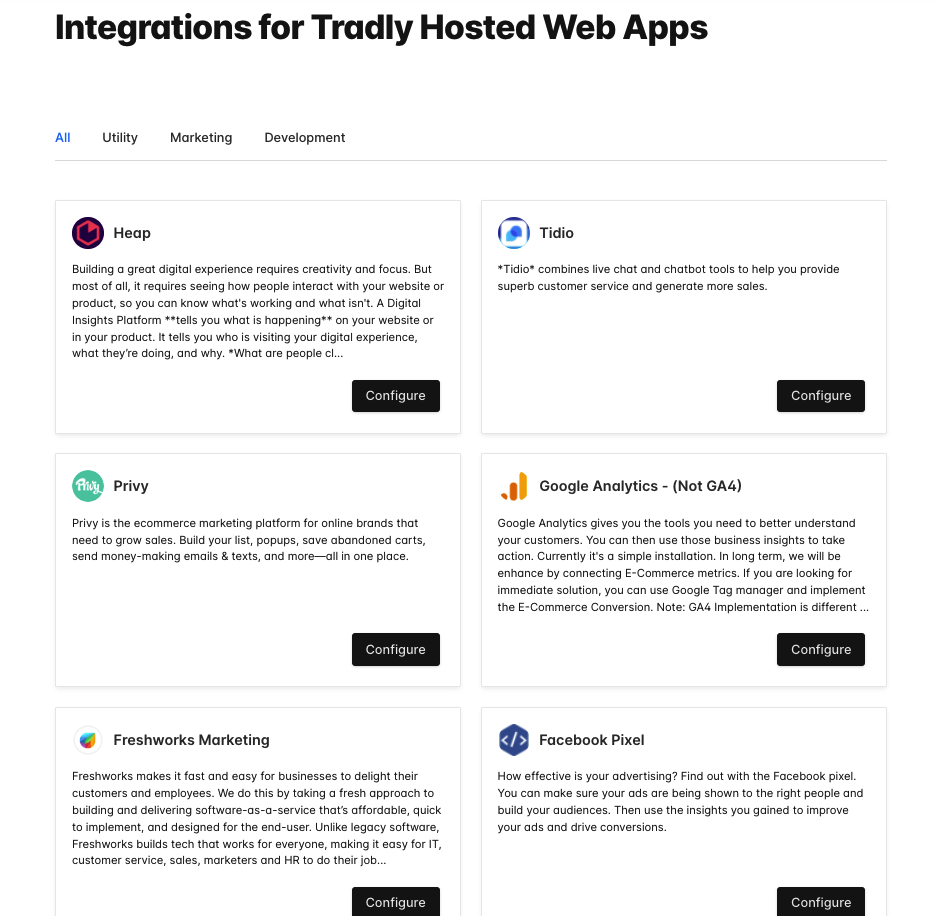 Dozens of website integrations to help you with marketing, analytics and products. [Check here](https://tradly.app/integrations)
Simple and FREE. Launch your project today!
- Launch Marketplaces, Online Storefronts, Booking Apps, Classifieds, Directories, Partner Portals, App Stores, etc.
- Tradly pricing starts with ZERO. You pay only when you grow.
- Free No-code Integrations, No-Code Editor
- More about Headless Commerce API
- Open source Repositories - iOS, Android, Web App
- Youtube Video series on how to build a marketplace
- VIDEO: Choosing the right stack and how to approach different solution
- Read: Why it’s better to use pre-built solution like Tradly
Also see: D2C Meaning · B2B Meaning · How to Create a Marketplace Website · Agriculture Marketplace